When it comes to crop steering, irrigation is often seen as the main driver. But for Laust Dam from Cultivation Coaches, that view is far too narrow. "Your irrigation strategy is not the most important in steering, but it is very important," he explains. "It can be used as a tool to do both veg and generative growth. But it's not only the frequency of irrigation, not only the length of each irrigation. It's stop and start time, drybacks in between, and definitely also nutrition.:
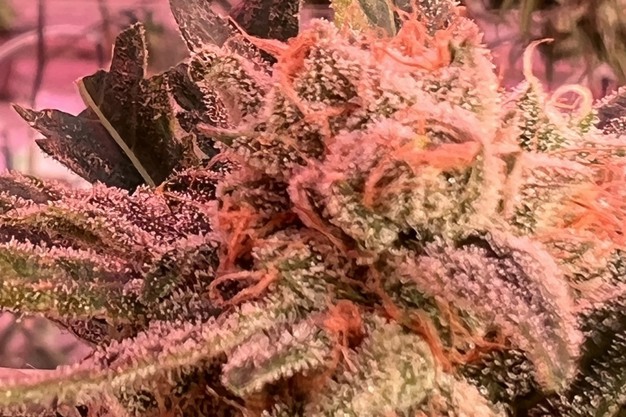
In practice, that means different irrigation strategies for veg and generative phases. "If you want to make the plant more generative with water strategy, then the general rule is that you start earlier and stop earlier with irrigation. You do larger irrigation volumes in each shot, and less frequency of the shots. If the plant needs the veg kick, then you start earlier, you stop later, more shots, and more frequent." At the same time, that is not the only tool to steer a cannabis crop.
 © Cultivation Coaches
More than one tool
Going all in with just one of the tools at a grower's disposal can do more harm than good. "If you always steer with irrigation, you see good results, then you back off a little bit, and it may be too late," he notes. "Many tools, and do a little with all of them, that has been my philosophy."
Rather than relying on a single lever, Laust takes care to point out the importance of using all available tools in small increments. "I don't want to steer with one tool only. If I can do it with humidity, temperature, light level, CO₂, and my water strategy, I've got five or six tools that I just need to do a bit of each with, instead of getting drastic on one. The more tools you have to control the balance, the easier it'll be to do it in a gentle way."
Steering with nutrition and EC
Nutrition is another steering tool. It's a matter of building fertilizer recipes based on crop observations and lab tests. "Without having proper lab tests of your nutrition, I'd never change the recipe. I'd always need to see the crop, lab results, and then I can steer my recipe to fit exactly with the cultivation at hand. In the vegetable world, we use sap samples, which I hope the cannabis world can take that on as well. But it's not so easy to transport even leaves of cannabis. That's still an issue. But that is just another tool to help me to see, say, why potassium is low, to understand how much to feed. It takes a lot of experience to get that right, especially when you don't have sap samples."
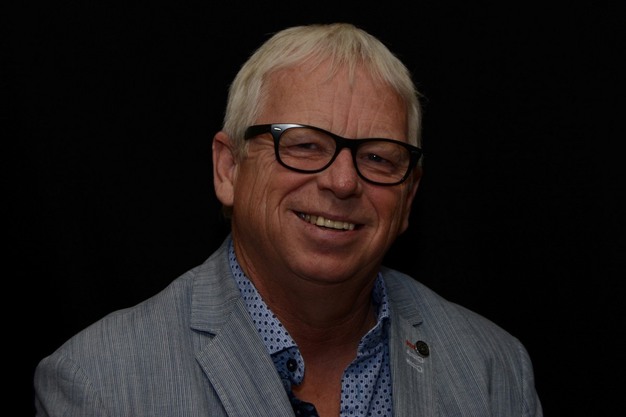 © Cultivation CoachesLaust Dam
Drain and feed samples, along with daily EC and pH checks, are the practical standards in cannabis. "The Delta EC tells you the difference between feed and drain. If drain EC is higher than feed EC, you're not watering enough. I'm watering 2.1, but drain comes out at 5.0, then I know I am underwatering and my plant is suffering." As a rule of thumb, Laust says, "If I'm too in, 1 EC, you know you are kind of in the balance between having enough water, and your feed EC is ok."
Toward the end of flowering, nitrogen management comes into focus. "I do believe that toward the end of the crop, a cannabis crop should have less nitrogen, and that's more for the consumption of the product. We don't need to fill it up with too much fertilizer in the end."
Climate control indoors and in greenhouses
While irrigation and nutrition are central, climate is no less critical. "If you have a good climate computer that gives you accurate VPD, if you have the tools to control it, you have an advantage on using that indoors. In the greenhouse space, you use the humidity deficit to have healthy growth without getting into fungal diseases."
But steering with humidity isn't always straightforward. "As soon as you put your lights on, or your dehumidification up or down, you see a change in what your plant does. The roots start to pump water up, the leaves maybe not evaporating yet, then they suddenly do. There are so many variables you have to be aware of when using your tools. Humidity is a super important part of steering the plant, but also the most difficult in a greenhouse to be in full control of. You can be in control of a certain range. This is where indoor grow has the biggest benefit, you can control your humidity."
A plant is a plant
Laust sees how crop steering in cannabis has matured. "From what I see, we made it very complicated in the beginning. In crop steering, every plant reacts the same to the tools that you are using. You can steer bud size, stem diameter, the amount of roots, all these things with the same tools that you'd steer in a flower or vegetable crop."
The differences lie not in the tools, but in timing and application. "Initially in cannabis, we believed that there was so much money we can invest in this and that piece of equipment, and we quickly found out that it wasn't even needed, there was no ROI."
A more uniform future
For Laust, the industry's evolution mirrors the path other crops have taken. "If you see the difference between growing a cherry and a beef tomato, that can be very challenging. That can be a lot of things done differently. But the principles and the tools to steer those crops are exactly the same, you just use them in a different way."
Over time, he expects cannabis will shed its patchwork of methods. "If I go to a cucumber grower, it'd take me five minutes to see they do things like everybody else. Or a tomato grower, no matter where they are in the world. Because over the last 70 years, they found out this is the best way of growing. If you go to cannabis growers, you see 20 different ways of growing cannabis."
That, he believes, is changing fast. "Everybody would start doing more or less the same thing. As the industry evolves, consultants are teaching everybody how to do these things. A matter of a few years, just like in the cucumber. It doesn't matter where you are in the world, you grow it in the same way."
For more information:
Cultivation Coaches
Tel.: +45 50 19 72 63
[email protected]
cultivationcoaches.com