Everybody in this sector likes to think of cannabis as a beast of its own, as if the concept of agriculture were somehow foreign to it. Yet, although we all agree the cannabis plant is special, we've reached a point where humans have pretty much mastered many aspects of growing a variety of crops, and cannabis is a part of that space too.
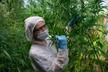
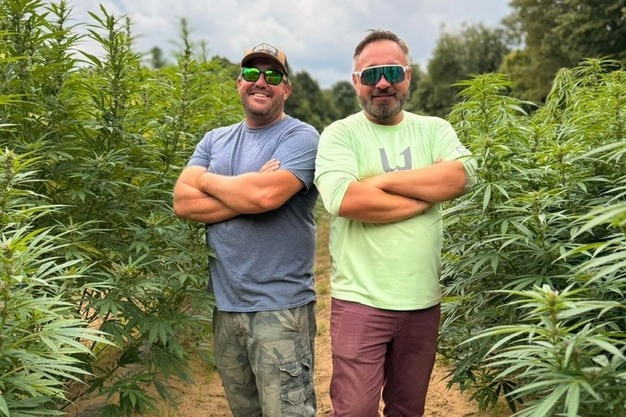
Take Shawn Docheff from outdoor cannabis grower Organic Growers, Southern Ontario. He comes from a family deeply rooted in agriculture: his grandparents and father-in-law farmed tobacco and cash crops, while his father spent his career working at a tobacco research station, where precision and crop trials were part of daily life. That tension between conventional farming practices and the way cannabis is commonly grown is at the heart of Shawn's approach at Organic Growers. A part of that is crop rotation. "In traditional agriculture, crop rotation is the normal thing to do," he says. "But in cannabis, it's almost never used."
 © Organic Growers
A lifetime in the fields
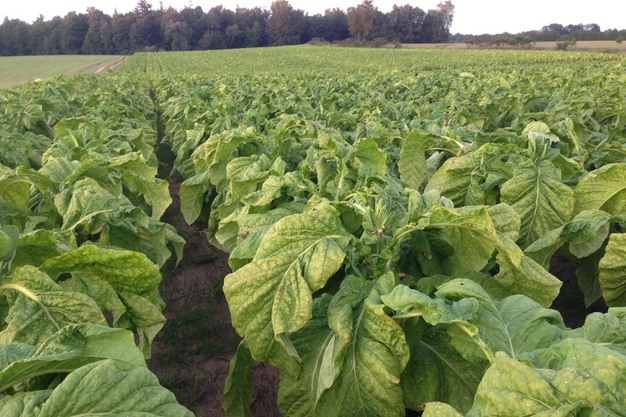
Based near Lake Erie on the 42nd parallel, in what was once the province's 'tobacco belt,' the company grows sun-grown cannabis on 4.5 acres of prime outdoor farmland. Even more uniquely, the site sits within the Long Point region — a UNESCO Biosphere Reserve. For Shawn, joining Organic Growers wasn't just a business decision. It was a continuation of a lifetime spent in fields: first tobacco, then cash crops, then hemp, where he became one of the first Canadian growers to put smokable hemp flower on the market. That milestone came, in part, because he was already thinking about crop rotation. "On our farm, when we weren't growing hemp, we had vegetables such as cucumbers, tomatoes. A friend of mine was even rotating hemp with tobacco," he recalls. "Those kinds of rotations kept the soil healthier and the crops cleaner."
Now, with cannabis, he's applying the same rulebook farmers have used for centuries: don't plant the same thing in the same place, year after year. "When you're doing corn on corn, or cannabis on cannabis for that matter, the pest pressure and soil pathogens are going to build up over time," he explains. "You never get that break in the pest and disease cycle. Rotation is just common sense in farming."
 © Organic Growers
Changing the way cannabis is grown year round
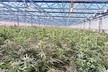
But in cannabis, common sense hasn't always been common practice. Many licensed facilities are maxed out on space, dedicating every square meter to cannabis. And many operators, especially those from the legacy side, didn't come into the legal market with an agricultural background. The result, Shawn notes, is fields and greenhouses that have been run continuously on cannabis crops, season after season.
At Organic Growers, Shawn wants to change that. "I'd like to try at least a small section of mustard seed for natural biofumigation," he says. "We'll also be putting down oats, because oats help build soil structure. It's about breaking cycles and giving something back to the ground."
That emphasis on treating the soil as an asset to be maintained, not a medium to be exploited comes naturally to someone raised in agriculture. "If you take care of the ground, it'll take care of you," Shawn says simply. "Our crops are going to get better with soil health and less disease pressure. That saves money too. You don't have to put as much into the crop to get it nice."
 © Organic Growers
The first company to ship to Germany
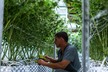
Crop rotation doesn't have to stop at open fields. Shawn points out that greenhouse operators, who face the same space pressures, could also benefit. "I know growers who rotate hemp with strawberries," he says. "In a greenhouse with gutters and fertigation, you could run strawberries outside of cannabis season, even with a fairly low-cost portable system. That rotation would keep the farm productive while giving the soil and the pest cycle a break."
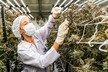
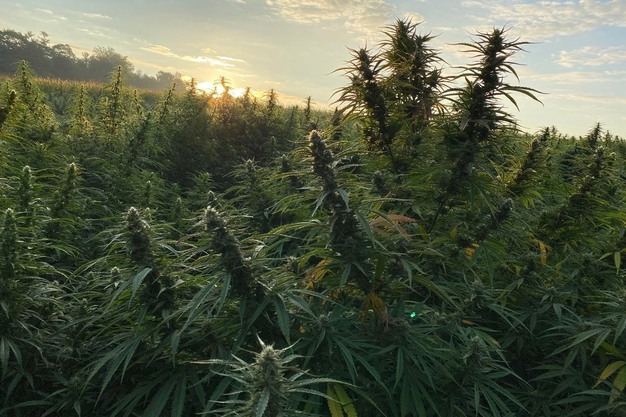
The results are already speaking for themselves. Organic Growers' recent harvests tested as high as 34% THC with 4.3% terpenes — levels rarely achieved in large-scale outdoor production. On top of that, Organic Growers became the first company in Canada to ship outdoor EU-GMP compliant cannabis to Germany — proof that precision farming, the right land, and the right system can deliver outdoor flower that meets the strictest global standards.
Shawn believes the cannabis sector will, eventually, align itself more closely with conventional agriculture. It won't just be crop rotation, but also variety selection, pest and disease trials, and long-term sustainability planning. "I'm surprised there isn't more research into cannabis varieties that are resistant to things like botrytis," he says. "We have research stations for tobacco and vegetables in Canada, but not for cannabis. Right now, it's up to farmers and companies to run those trials themselves."
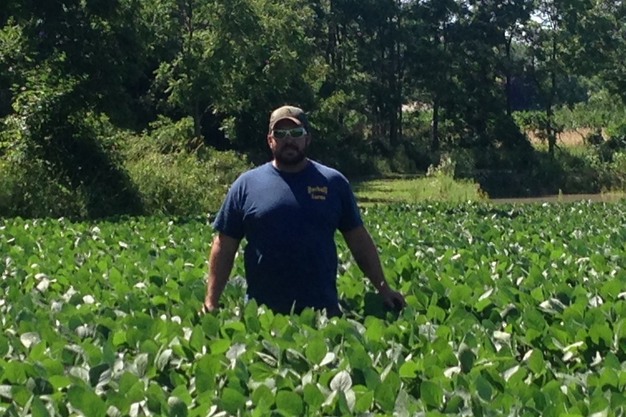 © Organic Growers
For now, his focus remains on cultivating high-quality outdoor flower in one of Canada's most fertile and ecologically significant regions, while also nudging the cannabis industry toward practices that every farmer already takes for granted. "It's not glamorous," Shawn admits. "But it's farming. And if you treat cannabis like a crop instead of a commodity, you're going to see better results in the long run."
For more information:
Organic Growers
Shawn Docheff
linkedin.com/in/shawn-docheff